Monkey Family Care

Caleb Ryan
| 23-08-2026
 · Animal Team
Have we ever watched a young monkey cling tightly to its mother and wondered how it learns to survive? At first glance, raising a baby may look like a simple part of family life. When we look closer, however, we find a much richer story.
Macaques care for their young through close family contact, help from other members of the group, and daily lessons learned through watching and copying. Every small action can help a young monkey become more confident and capable.
Close Motherly Care
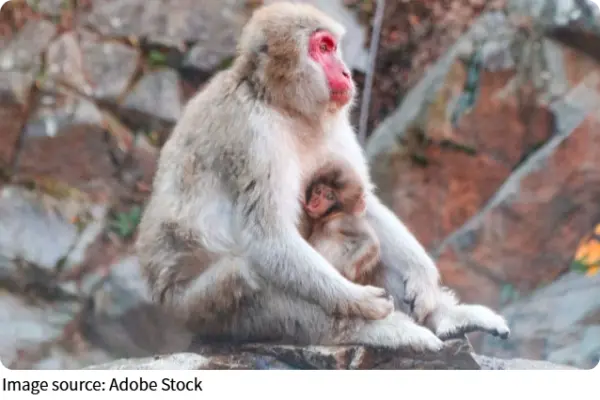
For a newborn, the mother is the main source of safety and comfort. She keeps the young one close to her body, carries it while moving through the group, and provides milk during its earliest stage of life. This close contact also helps the pair build a strong connection.
We can often notice the mother checking where her young one is, especially when the group begins to move. A small baby may hold onto her body while she walks, climbs, or rests. As the young monkey becomes stronger, it gradually spends more time beside her rather than staying attached all the time.
Care Through Grooming
Grooming is another important part of daily care. A mother gently cleans her young one's coat, removing dirt and unwanted tiny organisms that may cause discomfort. This routine is not simply about keeping the coat clean. It also gives mother and young monkey time to stay physically close.
The young monkey can slowly join this activity as well. By touching and grooming its mother, it begins to take part in a social habit that will remain important throughout life. These simple moments help us see how care and social learning can happen at the same time.
Help From The Group
One of the most interesting parts of macaque family life is that mothers are not always alone in caring for young monkeys. Other members of the group, especially younger females, may approach a baby, carry it briefly, watch over it, or stay nearby while the mother is occupied.
We can think of these helpers as young caregivers in training. They gain valuable experience by observing how mothers respond to a baby, how they hold it safely, and how they react when the young one becomes restless. In some groups, relatives are especially likely to take part, but social care can also involve individuals that are not close relatives.
Learning Through Play
As young monkeys grow, play becomes an important classroom. We may see them climbing, chasing one another, jumping between nearby surfaces, or carefully exploring new parts of their surroundings. These activities look playful, but they also build useful abilities.
A young macaque needs to learn how to move safely, judge distances, recognize suitable food, and understand the behavior of other group members. Instead of receiving formal lessons, it learns by watching experienced monkeys and trying things for itself.
Watching And Copying
Imitation plays a major role in this learning process. When an experienced monkey climbs a branch or investigates food, a young one may watch closely before attempting the same action. Sometimes the first attempt is uncertain, but repeated practice gradually improves coordination and confidence.
We can see this as a natural form of education. The group provides examples, while the young monkey supplies curiosity and practice. Over time, everyday activities become opportunities to learn skills that can support independent life.
Why Group Care Matters
Life in a social group gives young macaques more than physical protection. It also provides many chances to observe communication, movement, feeding habits, and social rules. A young monkey surrounded by experienced group members can learn from many different individuals rather than depending on one teacher.
When a young monkey becomes separated from the group, it loses access to much of this support. Staying connected therefore has practical value. The group offers familiar adults, potential helpers, and opportunities for continued learning.
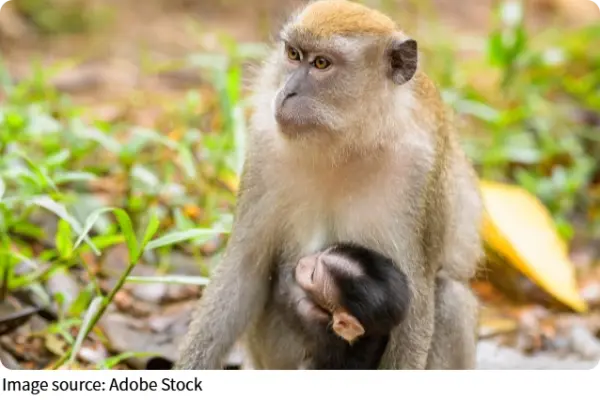
When we look at macaque parenting closely, we discover that raising a young monkey is a shared journey. The mother provides the closest care, while other group members may offer additional attention. At the same time, play, observation, and imitation prepare the youngster for the challenges of later life.Lykkers, the next time we see a young monkey clinging to its mother or playing beside older group members, perhaps we can look beyond the cute moment. We may be watching a small lesson in care, trust, cooperation, and learning. What part of this remarkable family life would you most like to observe in the wild?