Calcium-Powered Batteries

Owen Murphy
| 13-04-2026
 · Science Team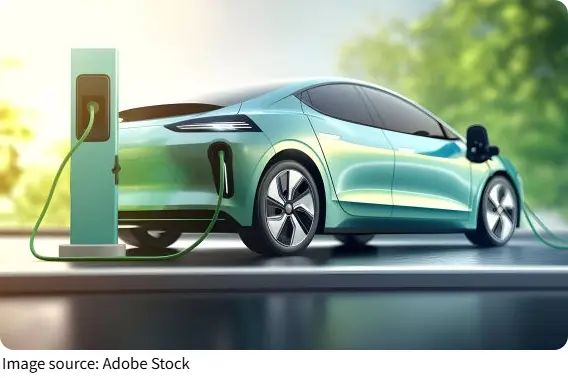
The race for safer, sustainable, and high-performance batteries has taken a leap forward.
Scientists at the Hong Kong University of Science and Technology (HKUST) have developed a quasi-solid-state electrolyte for calcium-ion batteries.
This breakthrough addresses the longstanding challenge of sluggish ion transport in calcium-based cells. By leveraging redox-active covalent organic frameworks (COFs) with aligned molecular pathways, calcium ions move efficiently, enabling reversible performance and durable cycle life. Lab tests showed a specific capacity of 155.9 mAh/g and retention of 74.6% after 1,000 cycles, signaling strong potential for practical deployment. Beyond electronics, this technology could also enhance renewable energy storage and support future smart grids.
Key Trends
1. Quasi-Solid-State Electrolytes
These electrolytes reduce flammability risks and enable longer cycle life in large-format batteries. Their hybrid solid-liquid properties allow safer, high-energy storage solutions suitable for both consumer electronics and grid-scale systems.
2. Abundant-Metal Battery Chemistries
Calcium is roughly 2,500 times more abundant than lithium. Using calcium and other earth-abundant ions reduces reliance on scarce materials, lowers costs, and minimizes supply chain risks. This shift is particularly relevant as renewable energy storage scales globally and sustainability becomes a central concern for manufacturers.
3. COF-Enabled Ion Transport
Redox-active COFs with aligned channels enhance multivalent ion mobility. This advancement enables alternative-ion batteries to achieve performance competitive with lithium, opening doors to more sustainable, high-energy designs. Improved ion transport also accelerates charging rates, making these batteries suitable for fast-charging applications.
Industry Implications
1. Grid-Scale Energy Storage
Calcium batteries could provide low-cost, cobalt-free solutions for long-duration storage, seasonal energy balancing, and renewable firming. Their abundance and stability make them ideal for utility-scale applications and energy resilience strategies.
2. Electric Vehicle Manufacturing
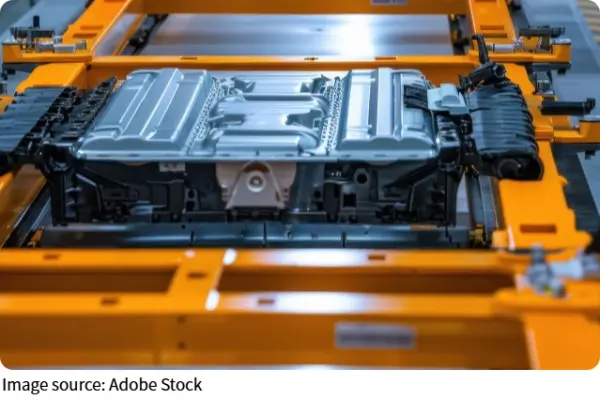
Automakers may design new battery packs using calcium cells if energy density and thermal stability meet performance benchmarks. This supports sustainable EV production and diversifies energy storage options beyond lithium-ion, helping reduce dependency on critical minerals.
3. Battery Materials Supply Chain
Suppliers and recyclers could transition from lithium-cobalt dependence to abundant, non-critical feedstocks. This restructuring enhances supply security, reduces environmental impact, and fosters circular, sustainable manufacturing practices.