Saturn’s Stunning Secrets

Nolan O'Connor
| 07-04-2026
 · Science Team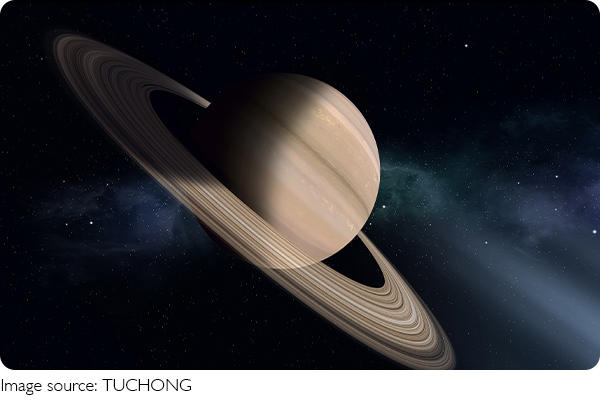
Introduction: The Jewel of the Solar System
Saturn is one of the most captivating planets in our solar system.
Known for its magnificent rings and striking appearance, it has fascinated astronomers and space enthusiasts for centuries.
Beyond its beauty, Saturn holds many scientific mysteries that reveal the complexity of planetary formation and celestial mechanics. Observing this gas giant sparks curiosity and inspires exploration of distant worlds.
The Rings: A Cosmic Masterpiece
Saturn's rings are its most iconic feature, composed of billions of ice and rock particles. These rings vary in thickness and density, creating intricate patterns visible even from Earth through telescopes. They are not permanent; over millions of years, they shift and evolve. Some scientists suggest that the rings may be remnants of a shattered moon, while others believe they are formed from primordial material left over from the planet's birth.
Unique Atmospheric Phenomena
Saturn's atmosphere is a dynamic and turbulent environment. Powerful storms sweep across the planet, with winds reaching speeds of up to 1,100 miles per hour. Hexagonal cloud patterns at the north pole, a phenomenon still not fully understood, rotate with mesmerizing precision. Saturn's atmosphere is primarily hydrogen and helium, but traces of methane, ammonia, and water vapor create beautiful hues and swirling storms that make the planet visually stunning.
Moons: Worlds of Wonder
1. Titan
Titan, Saturn's largest moon, is shrouded in a dense, nitrogen-rich atmosphere. It has lakes of liquid methane and rivers carved by flowing liquids, resembling Earth's landscapes in many ways.
2. Enceladus
Enceladus is an icy moon known for geysers that eject water vapor into space. These plumes suggest a subsurface ocean beneath the icy crust, making it a key target in the search for extraterrestrial life.
3. Other Moons
Saturn has over 80 confirmed moons, each with unique features. Some are heavily cratered, while others show signs of tectonic activity or unusual surface formations. Together, these moons create a miniature solar system around Saturn, offering endless opportunities for study.
Exploration and Discoveries
Human exploration of Saturn began with the Pioneer and Voyager missions, which provided the first close-up images. The Cassini spacecraft, which orbited Saturn for over 13 years, revealed astonishing details about the planet, its rings, and its moons. From observing storms and ring dynamics to discovering geysers on Enceladus, these missions expanded our understanding of planetary systems and their complexity.
Reflection: The Beauty of Discovery
Studying Saturn reminds us of the diversity and wonder of the universe. Its rings, storms, and moons demonstrate the intricate balance of cosmic forces. Observing Saturn encourages curiosity, critical thinking, and a deeper appreciation for the processes that shape planets. The planet's beauty and mystery inspire both scientists and dreamers, proving that even in the vastness of space, there is endless fascination waiting to be explored.