Evolution of Watch Design

Mason O'Donnell
| 07-04-2026
 · Fashion Team
The Beginning of Watchmaking: Mechanical Marvels
The history of watchmaking begins in the 16th century, a time when craftsmanship, precision, and ingenuity came together to create mechanical watches.
Initially, these timepieces were bulky and worn as pendants or attached to clothing. The mechanical movement was powered by a series of intricate gears and springs, requiring regular winding to function. Early watches were symbols of status, often ornately designed with lavish materials and exceptional artistry.
As the centuries progressed, watchmaking evolved, and by the 18th century, pocket watches became the norm. These timepieces, although still mechanical, were more compact and accurate. Advances in technology allowed for smaller movements, and Swiss craftsmanship dominated the scene, setting the foundation for today's luxury watch industry.
The Rise of Wristwatches: From Functional to Fashionable
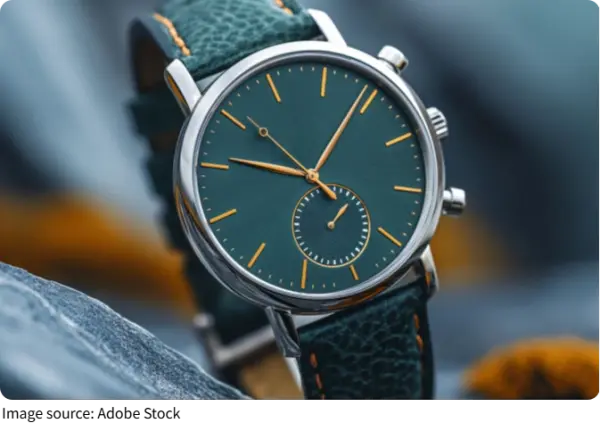
By the early 20th century, wristwatches began to replace pocket watches, especially in professional and sporting contexts. People found wristwatches far more practical than pulling out a pocket watch, and the convenience of wearing time on the wrist was quickly embraced by civilians. In the 1920s, watchmaking companies like Rolex, Omega, and Patek Philippe began to perfect wristwatch designs, focusing on durability, functionality, and aesthetics.
Wristwatches became both a symbol of personal style and a statement of engineering excellence. The 1950s and 1960s marked the golden age of watchmaking, with brands introducing models that were more water-resistant, featured automatic movements, and were designed for specific purposes—diving watches, pilot watches, and dress watches. These designs catered to an emerging demand for both precision and elegance.
The Quartz Revolution: A Game-Changer in Watchmaking
The 1970s introduced a significant leap forward in watch technology with the rise of quartz watches. Powered by a battery, these watches used a quartz crystal to regulate timekeeping, offering superior accuracy compared to mechanical watches. The introduction of the Seiko Quartz Astron in 1969 marked the first mass-produced quartz watch, which set the stage for a worldwide revolution in the watch industry.
The popularity of quartz watches skyrocketed in the 1980s and 1990s. Brands like Casio, Swatch, and Seiko made affordable, stylish, and reliable watches that anyone could own. The quartz revolution shifted the watch market, making timepieces more accessible to the mass public while offering precision that mechanical watches couldn't match.
The Smartwatch Era: Merging Technology and Time
In the 21st century, we've witnessed the fusion of traditional watchmaking with cutting-edge technology. Modern smartwatches, first popularized by well-known tech brands, have transformed the idea of what a watch can do. These smart devices offer much more than just telling time—they monitor heart rate, track fitness, enable communication, and even provide real-time navigation.
Smartwatches integrate seamlessly into our digital lives, acting as an extension of smartphones. As technology continues to advance, smartwatches are becoming more sophisticated, offering features such as ECG monitoring, sleep tracking, and compatibility with apps for various tasks. Some luxury watchmakers, such as Tag Heuer and Garmin, have embraced smart technology by merging it with traditional Swiss craftsmanship, resulting in hybrid timepieces that blend luxury with innovation.
Reflections on the Future of Watch Design
The journey from mechanical timepieces to smartwatches has been one of continuous innovation. Today, watches are no longer just about telling time—they are an expression of individuality, style, and technological advancement. As smartwatches evolve, we can expect even more personalized and functional designs, tailored to meet our ever-changing needs.
The future of watchmaking may see further integration of AI, more eco-friendly materials, and possibly even new ways of interfacing with technology beyond the screen. However, despite these advancements, mechanical and luxury watches will always maintain a timeless appeal, serving as a reminder of the rich history and craftsmanship that shaped the evolution of horology.
In the end, whether you are drawn to the elegance of a mechanical masterpiece or the cutting-edge capabilities of a modern smartwatch, one thing remains certain: the world of watchmaking will continue to evolve, offering new ways to celebrate time.